Why Fall Is a Good Time to Clean Tennis and Pickleball Courts in Pace and Milton
Short answer: Fall is a practical time for HOAs, clubs, churches, schools, and parks in Pace, Milton, East Milton, and Bagdad to have tennis and pickleball courts cleaned. Cooler days make the work easier, and an acrylic color coat needs a surface cleaner at limited pressure so the coating stays on the court.
Tennis and pickleball courts in Pace, Milton, East Milton, and Bagdad sit through the same humid summer as everything else in Santa Rosa County. By fall, a color coat can show mildew, algae, pine debris, and dirt in the low spots. A damp film is also slick underfoot. That is a footing problem for players, and it is a reason for an HOA, a club, a church, a school, or a parks department to have the court cleaned while the weather is easier to work in.
Pace Pressure Washing Pros quotes that cleaning. The visit is a wash of an acrylic playing surface. It is not a resurfacing, a crack repair, or a new color coat.
Cooler Days, Without Pretending the Humidity Left
NOAA's 1991–2020 climate normals for the Milton Experiment Station (USC00085793) put October's average high at 79.6°F and the monthly mean at 66.9°F. July at that station averages 80.1°F, with an average high of 91.0°F. August's average high is 90.8°F. November is cooler still: the average high is 69.8°F and the average low is 43.0°F.
Those are 30-year normals, not a forecast for a particular week. They do show why fall is a workable window. Midsummer afternoons in Santa Rosa County are hot, and a court in full sun is a hard place to spend a wash. October is milder. November can bring a cold morning, so a day that stays near freezing is a reason to wait. The wider seasonal picture for exterior work is in fall and winter pressure washing in Pace and Milton.
The Gulf Coast does not turn dry in October. Shaded corners can hold mildew through the cooler months. Pick a mild, dry day so the court can be washed, rinsed, and left to dry before players come back.
What a Wet Summer Leaves on the Color Coat
The American Sports Builders Association says algae, mold, and mildew show up most often in damp, low-traffic parts of a tennis court. Shade from trees keeps the surface cool and wet, which is why the association generally advises against letting trees overhang or shade a court. Keeping the surface clean limits that growth. Leaves, twigs, and other debris should come off as soon as possible.
SportMaster's maintenance manual for its acrylic sport surfaces says the same thing in practical terms. Watch shaded areas and corners where organic debris collects. Leaves and pine needles stain the court and are a breeding ground for mold and mildew. The manual says it is especially important to get leaves off in the fall and to keep the court clear of debris through the winter. That lines up with the pine cover around Milton, Pace, East Milton, and Bagdad.
Dirt in standing water is a separate problem. SportMaster says water left in birdbaths drops dirt on the coat, and that dirt acts like sandpaper under players' feet and abrades the surface. A green or black film on a damp court is also slick. That slick film is a footing issue in play, separate from how the court looks from the fence.
Acrylic coatings do not support fungus growth, SportMaster says. Growth comes from food and drink spills, decaying matter, and other material sitting on the surface. If that film is left in place, ASBA says the color coat around it can discolor, and the stain can be hard to correct later. Cleaning promptly is the prevention they describe. Spores are hard to kill for good. If the shade and the debris stay, the growth can come back, and a later wash may be needed.
Acrylic Color Coats Need a Surface Cleaner
Outdoor tennis courts, and many pickleball courts, are an acrylic color coat over asphalt or concrete. SportMaster's manual covers those acrylic surfaces and discusses tennis, pickleball, and basketball facilities together. The texture has sand in it. The wash has to leave that sand in place.
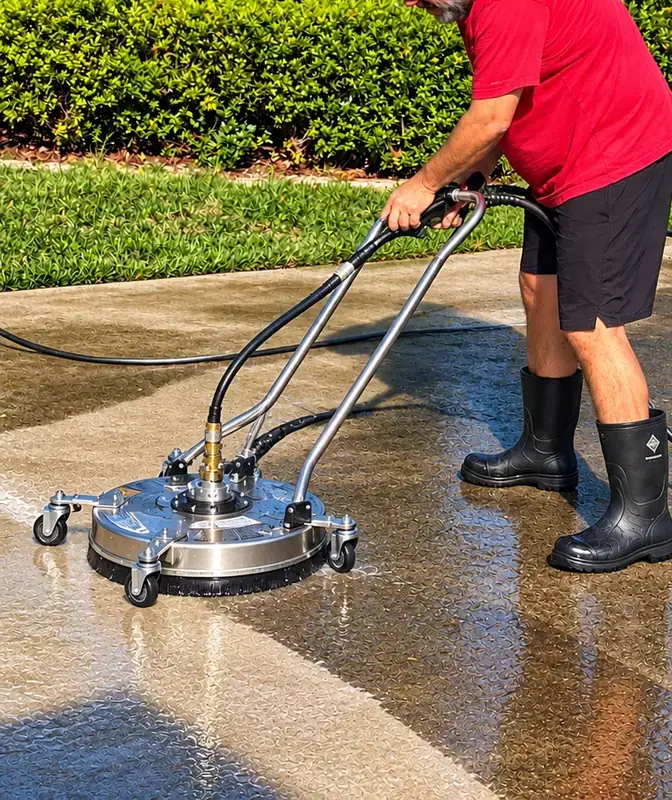
SportMaster says surface pressure washers are ideal for outdoor courts. They clean evenly and avoid the stripes a wand leaves. A wand tip held too close to the surface can damage the coat and strip it. The manual also says frequent scrubbing and pressure washing can strip the sand out of the texture and wear the surface early. Limit the pressure, and keep the tip off the color coat.
Har-Tru gives a number for occasional hard-court cleaning: 1,500 psi maximum, and walk-behind rotary equipment is the setup it says is best suited. For algae, Har-Tru says a wash may be paired with a bleach solution that is approved for outdoor use, and that a small test area comes first so the color does not shift. ASBA's paper says pressure washing can help on an acrylic court when the chemicals are ones the surfacing manufacturer and the local environmental agency accept. Repeated cleanings may be needed because of spores.
That is the quote we give: a surface cleaner, pressure kept within the coating maker's limit, and chemistry that maker accepts. House walls and shingle roofs are a different limit. Those are a soft wash, where the pressure stays low enough that the surface is not blasted. A court color coat has the limit above. A wand parked on that coat is how the texture comes off.
Clay, fast-dry, and sand-filled turf are a different maintenance system. ASBA does not treat them like an acrylic color coat. Tell us the surface when you call. This quote is for acrylic tennis and pickleball courts.
Who This Quote Is For
This is for people who manage courts other people play on: HOAs, tennis and pickleball clubs, churches, schools, and parks and recreation departments in Pace, Milton, East Milton, and Bagdad. A homeowner with one acrylic court can ask for the same quote. Tell us the count, whether the surface is an acrylic color coat, how much shade and tree cover the courts have, and when players are on them so the wash can be planned around play.
Routine care between washes is still the facility's: blow or sweep leaves and pine needles, and get standing water off birdbaths. SportMaster suggests a look about once a month for mold and mildew in the shade. A monthly blow-off is ordinary court care. Call when the film, the stains, or the slick patches need a wash.
How we work with property managers and facilities staff is on the commercial pressure washing page, and pressure washing in Milton, FL covers the local service area. Court cleaning is something we quote. It is not a separate resurfacing trade.
Cleaning and the Years Between Resurfacing
SportMaster says basic cleaning helps prevent premature wear and staining, and that it extends the useful life of the surface between resurfacing cycles. The manual states a standard resurfacing cycle of 5 to 8 years for SportMaster acrylic sport surfaces. That is that manufacturer's figure for its own coatings. Use, shade, drainage, and how the court was built all move a real court off a printed interval. Har-Tru recommends recoating its Proflex system every 4 to 7 years, depending on use and environment. Those are two manufacturers' numbers for their own products. We will not blend them into a lifespan for your court.
The same SportMaster manual says frequent pressure washing wears the surface early by stripping sand out of the texture. A wash that is too aggressive shortens the coat you are trying to keep. Pavement repairs and resurfacing, SportMaster says, belong to a sport-surfacing contractor. We clean. We do not fill cracks, recoat, or rebuild the base, and a quote is not a promise the coating will last a set number of years.
Questions About Court Cleaning
Is fall a good time to clean tennis and pickleball courts in Pace?
Yes, on a mild, dry day. NOAA's 1991-2020 climate normals for the Milton Experiment Station put October's average high at 79.6°F and the monthly mean at 66.9°F, compared with a July mean of 80.1°F and an average high of 91.0°F. November's average low at that station is 43.0°F, so a morning that stays near freezing is a reason to wait. SportMaster also says leaves and pine needles should come off in the fall because they stain an acrylic court and feed mold and mildew.
Can you pressure wash an acrylic tennis or pickleball court?
A controlled wash can. SportMaster says surface pressure washers are ideal for outdoor acrylic courts, and that a wand tip held too close can strip the coating. Har-Tru limits occasional cleaning to 1,500 psi and says walk-behind rotary equipment is best suited. Frequent pressure washing can strip the sand out of the texture and wear the surface early. We quote that controlled clean. We do not resurface courts.
Why do courts turn green or get slick here?
The American Sports Builders Association says algae, mold, and mildew show up most often in damp, low-traffic areas, and that shade from trees keeps a court cool and wet. A damp film is a footing problem for players. SportMaster says dirt left in standing water acts like sandpaper underfoot and abrades the surface. Cleaning removes the growth that is there. Spores can bring it back if the shade and debris remain.
Do you clean courts for HOAs, clubs, churches, schools, and parks?
Yes. We quote tennis and pickleball court cleaning for those properties in Pace, Milton, East Milton, and Bagdad. Tell us how many courts, whether the surface is an acrylic color coat, and when players use them. Clay, fast-dry, and sand-filled turf are a different maintenance system, so say so if that is what you have.
Will a cleaning make the coating last longer?
SportMaster says regular cleaning helps prevent premature wear between resurfacing cycles, and it states a standard cycle of 5 to 8 years for its own acrylic sport surfaces. That is the manufacturer's figure, not a promise for every court. The same manual says frequent pressure washing can wear the surface early. We clean. We do not resurface, and a quote is not a lifespan promise.
Get a Quote
Call or text (850) 845-9110 or Get a Quote for tennis or pickleball court cleaning in Pace, Milton, East Milton, and Bagdad. A photo of the green corner, the birdbath, or the full court is enough to describe the job. Tell us the surface and when the courts are in use.